5 Quick Tips for Crafting with Old Books
In this post, we’ll cover five quick tips to keep in mind before you start crafting with old books.
Affiliate Disclosure: This post may contain Amazon affiliate links. As an Amazon Associate I earn from qualifying purchases, at no additional cost to you. Linked items are what I personally use, but feel free to substitute with your own favorites.
I’m all about upcycling when I can, and I especially love crafting with old books. I’m a big Disney fan, and I love leaning into nostalgia, so crafting with Little Golden Books is one of my favorite things to do. That said, I’ve also made plenty of projects with other books I’ve come across along the way.
Whether you’re new to this or you’ve got a stack of thrifted books sitting around waiting for their next life, these are the tips I wish I knew before I started crafting with old books.
1. Writing Inside a Book Doesn’t Mean It’s Game Over
Just because a page has some writing in it doesn’t mean it’s always unusable. You can still find ways to work around it, whether you cut around the writing or cover it up with a sticker. I once had a page in one of my books that I thought was complete trash because it was COVERED in scribbles, only to turn it around and see a beautiful image on the other side. (That one I actually ended up turning into a notebook!) Plus, sometimes you love page so much, that you just leave the little kid’s handwriting in the corner, because honestly, it adds a little character.
2. Take Them Apart Carefully
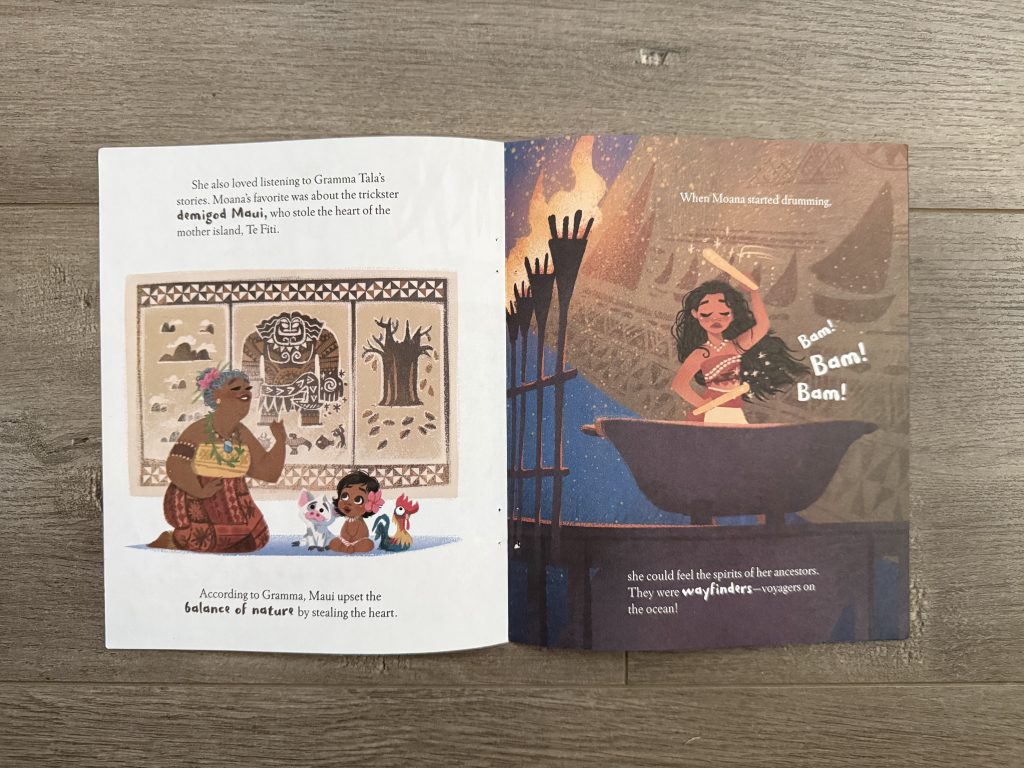
If you want to make the most out of your old books, take a little extra time when taking them apart. Yes, you could grab a craft knife and cut straight down through the pages, but if you slow down and look closely at your book first, you can look at the binding and find away to keep things as intact as possible.
Little Golden Books, for example, are held together by staples. If you can carefully remove those staples, you’ll end up with two signatures (two stacks of folded pages) instead of a bunch of separate half-pages. I’ve found this gives me a lot more to work with, especially for bigger projects, like when I’m making envelopes out of book pages.
3. Choose Your Tools Carefully
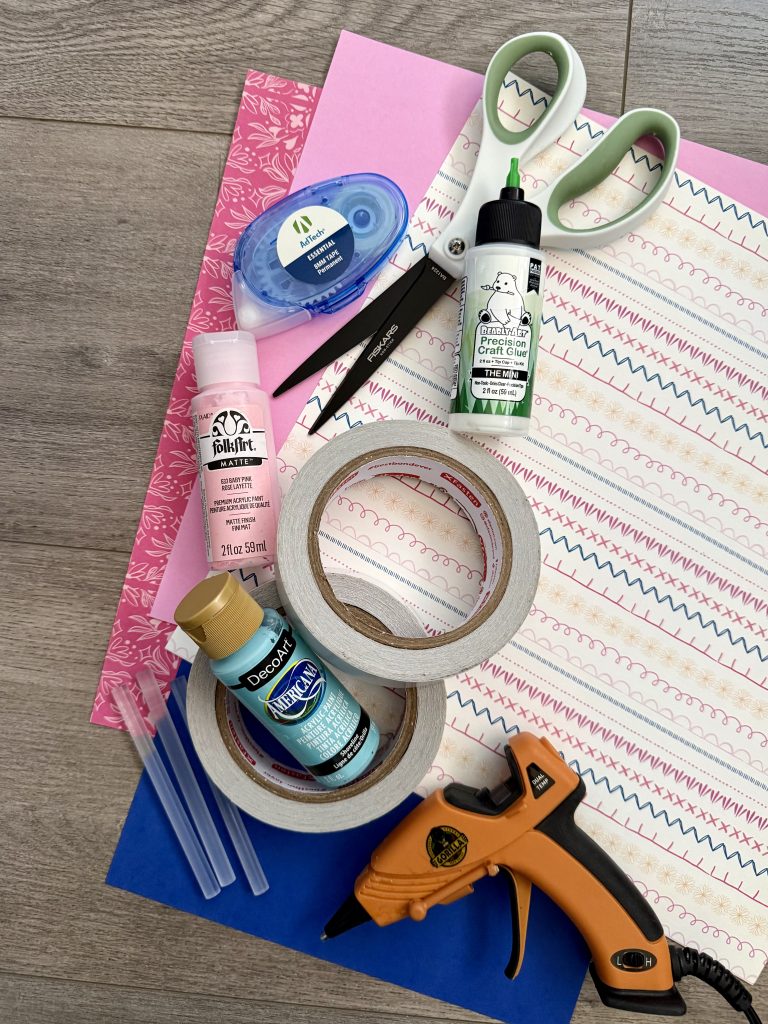
Different tools work better for different projects. I personally use these small pointy scissors about 90% of the time when I’m cutting out elements from book pages— they’re quick and give me the most control for smaller, detailed cuts. I also find they make it easy to take apart books that have sewn binding.
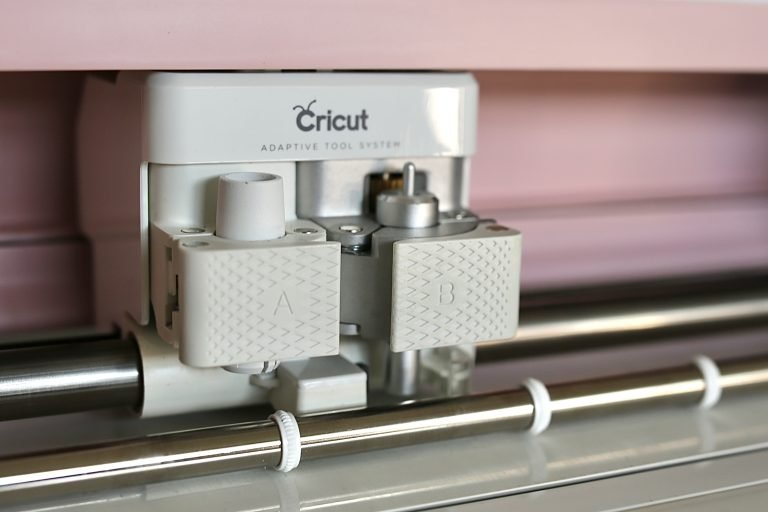
When I need a straight line, though, a paper cutter is my go-to. And while I don’t pull out my Cricut as often these days, I still love it for projects where I want things to look more polished. I use it a lot for cutting envelopes or shapes where I need something more precise, like gift tags. It is an investment, but it’s worth it if you know you’ll be doing a lot of projects with it.
4. Consider What Matters Most to You
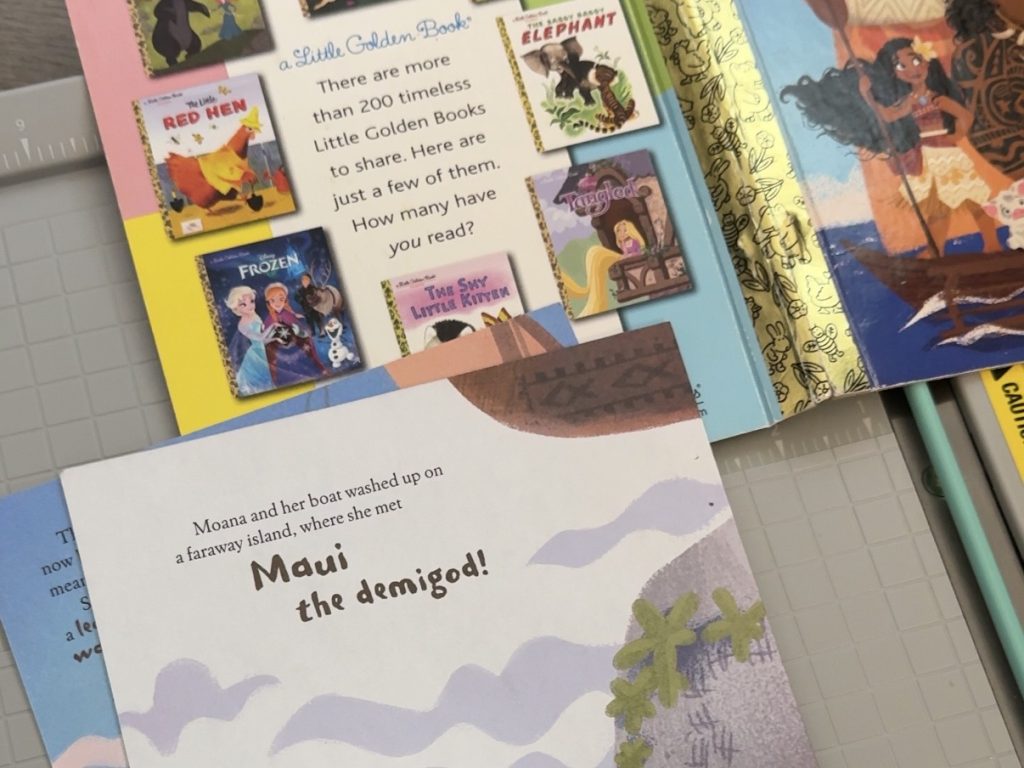
A lot of what makes a book “worth grabbing” comes down to personal preference. What’s a no-brainer for you in the thrift store might be something someone else wouldn’t look at twice.
I love upcycling Little Golden Books into notebooks, junk journals, and scrapbooks. I know some crafters are really adamant about preserving that iconic gold spine, but personally, I don’t worry about it too much in most of my projects, since I usually trim the covers down anyway and bind them using my Cinch machine. For me, the pages and their images are what I care about most.
Paying attention to what matters to you when sourcing books will make it a lot easier to know whether something’s a pass or a must-grab.
5. Anything Can Have a Purpose (If You Want It To)
I love finding new ways to use things up, and I hate being wasteful. It may be a bad habit, but I have a tendency to hold onto a lot of my paper scraps, because I just think that you never know when you might be able to use them. So if you see something you really like, it’s worth holding onto it, even if you don’t know exactly what you plan to make with it yet.
Now, I’ll be the first to admit my scrap pile is actually a little chaotic.
Pro Tip: Organize your scraps in a way that works for you so it doesn’t feel like you’re just holding onto trash. Personally, I keep my paper scraps in one folder, though honestly, it’s not always as organized as I’d like it to be. Find whatever system works best for you and go from there.
Final Thoughts
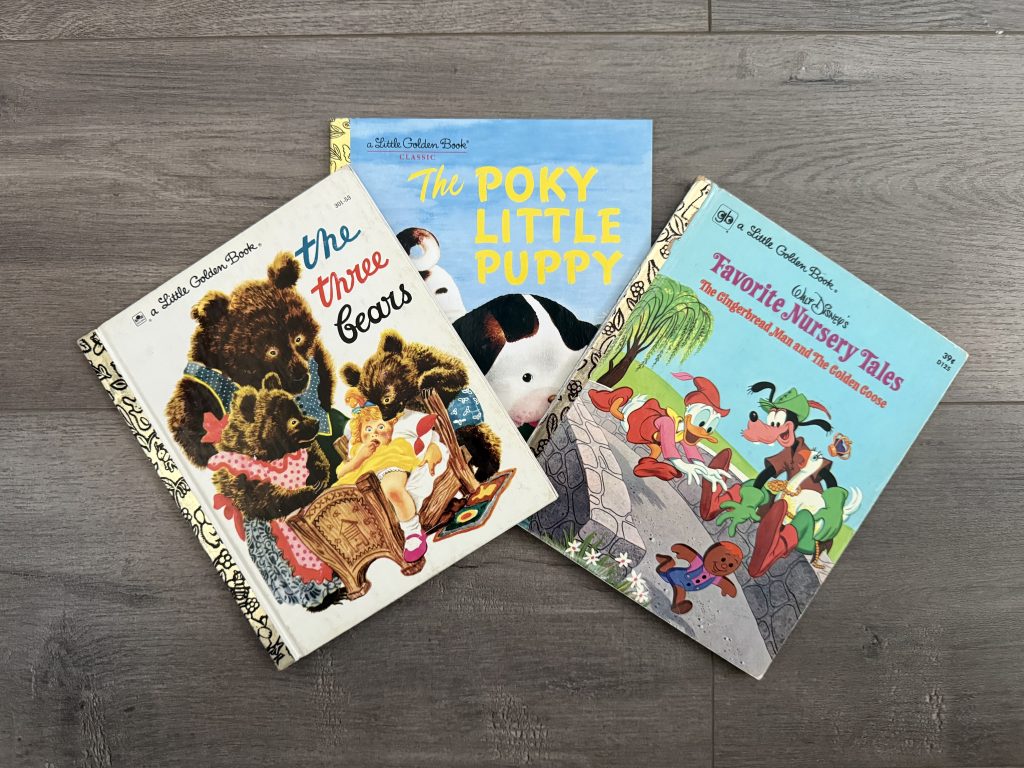
There are so many fun projects out there you can make with old books, and a little prep work goes a long way in making them turn out even better. Whether you’re just getting started or you’ve been at this for a while, I hope these tips make things go smoothly for you.
Ready to start crafting? Check out 7 Creative Ways to Upcycle Old Children’s Books for project inspiration.